
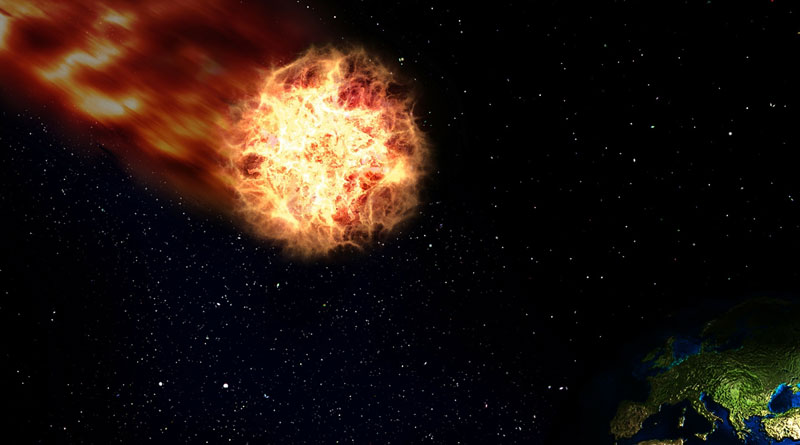
Comet, Set to Strike The Earth
What if a Comet strikes to earth?
What if a Comet strikes earth? is a genuine question many people may think.
In this article, we shall mention the possible disaster that can happen considering all the scientific research and finding done by scientists till date.
Here are possible effects that could happen if a comet strikes earth:
A comet striking Earth would have catastrophic consequences for life on the planet. Depending upon the size of comet, the impact of a comet would release an enormous amount of energy, equivalent to the explosion of a large nuclear bomb. The impact would create a massive crater and release a massive amount of dust and debris into the atmosphere, blocking out total sunlight and causing a “nuclear winter” effect.
Effect on Life on Earth
The immediate effects of a comet strike would be devastating for any life forms in the impact zone. The intense heat and pressure generated by the impact would vaporize anything in its path, and the blast wave would level buildings and forests for miles around.
The dust and debris thrown into the atmosphere would cause widespread fires, and the ash and smoke would block out sunlight and cool the planet’s surface, causing crop failures and food shortages.
In the long term, the effects of a comet strike would be even more severe. The dust and ash in the atmosphere would cause a “nuclear winter” effect, reducing the amount of sunlight reaching the surface and causing a drastic cooling of the planet.
This would make it difficult for plants to grow and would lead to mass extinction of many species. The lack of sunlight would also disrupt the food chain, causing a domino effect that would ultimately lead to the extinction of many other species.
Also following points to consider:
The size and composition
The size and composition of the comet would play a major role in determining the severity of the impact. A larger comet made of denser material would cause more damage than a smaller, less dense one.
The Angle
The angle of impact would also be important. A comet that strikes Earth at a steep angle would cause more damage than one that strikes at a shallow angle.
Massive Tsunamis
A comet strike could also trigger massive tsunamis if it lands in the ocean. The massive impact would displace a large amount of water and create huge waves that could flood coastal areas.
Earth's Rotation
The impact of a comet strike could also disrupt the Earth’s rotation and tilt, leading to changes in the climate and weather patterns. This could lead to extended periods of drought, flooding, and extreme weather conditions.
Psychological and Economic Effects
In addition to the physical damage caused by the impact, a comet strike could also have psychological and economic effects.
The widespread destruction and loss of life would cause widespread fear and trauma, and the economic disruption caused by the event could lead to long-term economic and social instability.
Science and research
Scientists are actively searching for near-Earth objects (NEOs) that could potentially collide with Earth, such as comets and asteroids. They use telescopes and other instruments to track these objects, and they also use computer models to predict their potential impact.
Possibility
While the likelihood of a comet striking is relatively low, it is important for scientists and governments to be prepared for such an event. This includes developing plans for evacuation and disaster response, as well as researching ways to deflect or destroy comets before they reach Earth.
It’s important to note that the scenario of a comet striking the Earth is a rare event and the probability of it happening is low. However, the potential consequences of such an event are so severe that it’s important for scientists and governments to be prepared for such a scenario.
Environment
The environment of the Earth would play a significant role in the aftermath of a comet strike. The type of terrain in the impact zone would greatly influence the extent of the damage caused by the impact. For example, a comet striking a heavily populated urban area would cause far more damage than one striking a remote, uninhabited area.
A comet strike in a heavily forested area would cause widespread fires and the release of carbon dioxide, which would contribute to the “nuclear winter” effect and exacerbate the cooling of the planet. Additionally, the loss of vegetation could lead to soil erosion, landslides, and other environmental problems.
Effect on Human Population
It’s also important to note that the environment would play a role in the health and survival of human populations. The disruption of food supplies and the spread of disease would exacerbate the death toll and make it difficult for survivors to rebuild. Additionally, the widespread destruction of infrastructure and the disruption of communication and transportation would make it difficult for emergency responders and aid workers to reach affected areas.
The disruption of ecosystems
The disruption of ecosystems and the loss of biodiversity could take centuries or even millennia to recover. Additionally, the loss of plant and animal life would have a ripple effect throughout the food chain and could lead to the extinction of many other species.
Overall, a comet strike would have a significant impact on the environment of the Earth and it would play a major role in determining the extent of the damage and the difficulty of recovery. It would be important to take into account the environment in any emergency response and recovery efforts in order to minimize the damage and help affected populations recover.
Conclusion
In conclusion, a comet striking Earth would have devastating consequences for life on the planet. The immediate effects would be very dangerous, and the long-term effects would be even more severe.
It’s important to note that the likelihood of a comet striking Earth is relatively low, but the potential consequences are so severe that it is important for scientists and governments to be prepared for such an event. This includes tracking potentially hazardous comets and other cosmic bodies and developing plans for evacuation and disaster response.


